-
Anti Racist Toolkit
Introduction for Practitioners: About This Toolkit
By working collaboratively to refine, expand and developthis toolkit, we can continue to support practitioners in making our communities more equitable and inclusive for everyone.This isn’t a “grab and go” resource. Think of it as a flexible space designed to support two key purposes:
-
Your Professional Learning
Explore curated information, ideas, and signposting to deepen your understanding and develop your own practice. -
Creating Learning for Others: With Learners, Partners or Peers
Using the resources as a foundation to design learning experiences that meet the needs of your audience.While there may be a small number of “ready to go” sessions, most materials are intended as starting points rather than complete solutions. Effective use of this toolkit will require thoughtful planning, adaptation, and facilitation.
This space has been created to bring together information, ideas, and resources to support learning, reflection, and dialogue around anti-racism. In line with the values and ethics of Community Learning and Development, it aims to promote inclusion, participation, empowerment, and collaborative learning.
We have sought to bring together a broad range of perspectives to deepen awareness and support critical engagement, and informed reflection. The materials are not intended to represent endorsed or recommended viewpoints. Instead, they are provided to support practitioners to explore different perspectives, examine ideas critically, and develop their own informed responses. This reflects CLD’s commitment to enabling individuals and communities to think critically, consider diverse experiences, and engage in meaningful dialogue about inequality and racism.
Approach to Learning and Engagement
We encourage you to approach this toolkit with curiosity, openness, and care. Reflection is central to its use, both in relation to your own values and practice, and in how you create learning opportunities for others. The aim is to support respectful dialogue, deepen understanding, and strengthen the capacity of individuals and communities to challenge racism and inequality in meaningful ways.
This toolkit is not a one-size-fits-all solution. Every context is different, and materials will need to be adapted to reflect the cultural, social, and organisational needs of your setting. The impact of the resources depends not only on the content itself, but on how they are used, particularly the skill, judgement, and sensitivity of the facilitator.
Working with Sensitive and Challenging Content
Some of the materials included address complex, sensitive, and at times challenging issues. Engagement with topics of race and racism can evoke strong emotions and may bring discomfort or distress for participants.
We recognise that not all content will resonate equally with everyone. While it is not our intention to cause offence or upset, we aim to provide a space that supports open, respectful engagement with difficult issues as part of ongoing learning.
Facilitators should be mindful of the emotional impact of this work and take responsibility for creating safe, respectful, and supportive learning environments. This includes acknowledging the emotional labour involved, encouraging self-care, and signposting to professional support where appropriate. An example “safe learning space” introduction slide with facilitator notes is available within the resources section.
Finally, this is a living toolkit. We welcome your feedback, additional resources, and success stories. If you have suggestions or new material to share, please email us, using the subject "AR Toolkit" to contact@cldstandardscouncil.org.uk
-
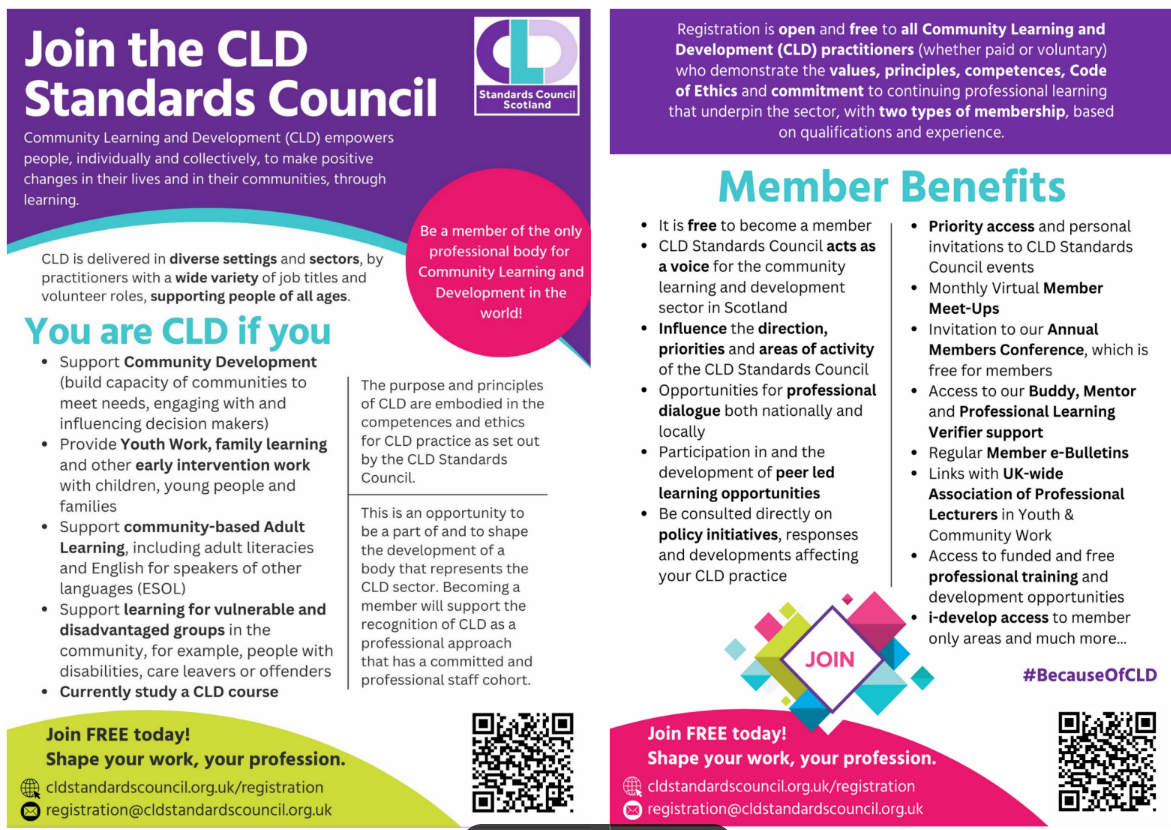
Are you a member of the CLD Standards Council?
If not, then take a look at what membership can offer you, and all CLD practitioners across Scotland, in both paid and voluntary work.
Registration | CLD Standards Council for Scotland
-
